
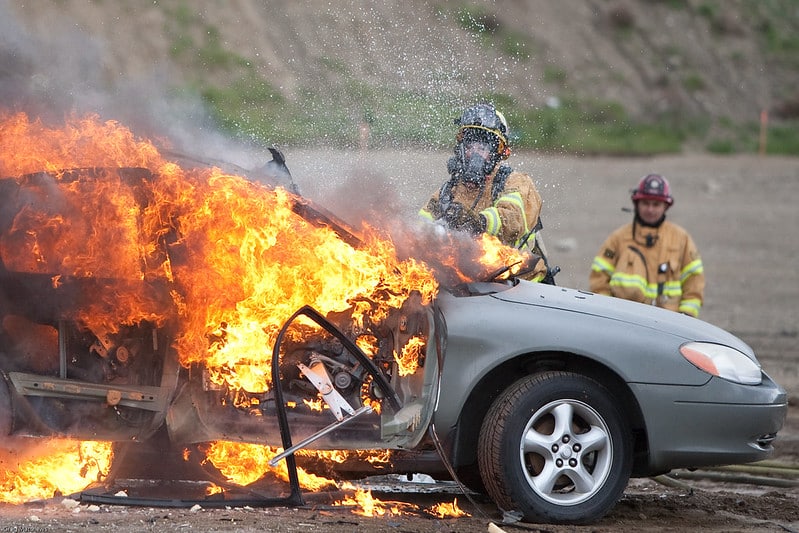
Vehicle fires are more common than many people realise. In the UK, thousands of vehicle fires are recorded every year, and while some are the result of accidents or arson, a significant proportion are caused by mechanical faults, poor maintenance, and electrical failures, many of which are entirely preventable.
Whether you drive a private car, manage a commercial fleet, or operate heavy plant machinery, understanding the causes of vehicle fires and the steps you can take to prevent them could save lives, protect your livelihood, and prevent serious financial loss.
This guide covers the most common causes of vehicle fires, practical prevention measures, what to do if a fire breaks out, and the fire safety equipment that should be carried in or fitted to vehicles.
How Common Are Vehicle Fires in the UK?
Vehicle fires account for a substantial proportion of all fires attended by UK fire and rescue services each year. The majority occur in private cars, but commercial vehicles, HGVs, buses, and agricultural and construction machinery are also frequently affected.
The consequences of a vehicle fire can be severe. A fire can take hold extremely quickly, in some cases within seconds of ignition, leaving little time to react. Fatalities and serious injuries do occur, though in many cases the greater risk is to property and the financial impact of losing a vehicle or fleet asset.
For commercial operators, a vehicle fire can also trigger regulatory scrutiny, insurance claims, and reputational damage. Prevention is always preferable to response.
Common Causes of Vehicle Fires
Understanding what causes vehicle fires is the first step towards preventing them. The most common causes include:
Electrical Faults
Electrical faults are one of the leading causes of vehicle fires. Faulty wiring, short circuits, and overloaded electrical systems can generate heat that ignites nearby flammable materials. This risk is heightened in older vehicles, vehicles that have had non-standard electrical modifications, or those where wiring has been damaged by rodents, wear, or impact.
Fuel System Leaks
Petrol and diesel are highly flammable, and any leak in the fuel system, from the tank, fuel lines, fuel injectors, or carburettor, can create a serious fire risk. Fuel vapour is particularly dangerous as it can ignite at a distance from the source of the leak.
Engine Overheating
An overheating engine can ignite oil, coolant, or other fluids that come into contact with hot engine components. Low coolant levels, a blocked radiator, or a failed thermostat are common contributing factors.
Oil and Fluid Leaks
Engine oil, power steering fluid, brake fluid, and transmission fluid are all flammable to varying degrees. Leaks that allow these fluids to contact hot exhaust components or electrical parts can lead to ignition.
Catalytic Converter Overheating
Catalytic converters operate at extremely high temperatures. If the vehicle is driven over dry grass, leaves, or other combustible materials, the heat from the catalytic converter can cause them to ignite beneath the vehicle. This is a particular risk in dry summer conditions.
Overloaded or Damaged Batteries
Vehicle batteries, both conventional lead-acid units and, increasingly, lithium-ion batteries in hybrid and electric vehicles, can be a source of fire if damaged, incorrectly charged, or subject to a short circuit. Lithium-ion battery fires in electric and hybrid vehicles present particular challenges as they can be difficult to extinguish and may reignite hours or days after the initial incident.
Aftermarket Modifications
Non-standard electrical systems, performance modifications, and poorly fitted accessories can all introduce fire risks that were not present in the original vehicle design. Improperly installed components may not meet the safety standards of original equipment, increasing the risk of overheating, short circuits, or fuel system issues.
Accidents and Collisions
Road traffic collisions can rupture fuel tanks, damage electrical systems, and bring hot engine components into contact with flammable materials. The risk is greatest in high-speed or heavy impacts, but even low-speed collisions can cause damage that leads to a fire.
Carrying Flammable Materials
Transporting flammable liquids, gases, or materials in a vehicle, particularly in the passenger compartment rather than the boot or a dedicated cargo area, significantly increases fire risk. This includes fuel cans, aerosols, cleaning products, and solvents.
How to Prevent Vehicle Fires
The good news is that the majority of vehicle fires are preventable. The following measures significantly reduce the risk:
Keep Up with Vehicle Maintenance
Regular, thorough vehicle servicing is the single most effective way to prevent vehicle fires. A competent mechanic will identify and address fluid leaks, electrical faults, worn components, and cooling system issues before they develop into a fire risk. Do not delay servicing or ignore warning lights on the dashboard – many of these indicate conditions that, if left unaddressed, can lead to a fire.
Check Fluids Regularly
Make a habit of checking engine oil, coolant, brake fluid, and power steering fluid levels regularly, particularly before long journeys. Low coolant levels are a particularly common contributing factor in engine fires. If you notice an unexplained drop in any fluid level, have the vehicle inspected for leaks immediately.
Watch for Warning Signs
Do not ignore potential warning signs of a vehicle fire risk. These include:
- A smell of burning, oil, or fuel when the engine is running
- Smoke or steam coming from the engine bay
- Dashboard warning lights, particularly the temperature warning
- Electrical components behaving erratically or fuses blowing repeatedly
- Visible fluid leaks under the vehicle
- Unusual sounds from the engine bay
Any of these signs should be taken seriously. Pull over safely, switch off the engine, and have the vehicle inspected before continuing to use it.
Be Careful with Aftermarket Modifications
If you have your vehicle modified, ensure that all work is carried out by a competent, qualified professional using components that meet the relevant safety standards. Electrical work in particular should always be undertaken by someone with appropriate qualifications. Cheap or poorly fitted modifications are a common cause of vehicle electrical fires.
Do Not Park Over Dry Vegetation
In dry weather, avoid parking over long grass, leaves, or other dry vegetation. The heat from the exhaust system and catalytic converter can be sufficient to ignite dry material beneath the vehicle. This risk increases during hot summers or periods of drought.
Store Flammable Materials Safely
Avoid transporting flammable materials unnecessarily, and when you must do so, ensure they are stored securely in appropriate containers in the boot rather than the passenger compartment. Keep aerosol cans away from direct sunlight and high temperatures – a hot vehicle interior can cause aerosols to pressurise and rupture.
Take Extra Care with Electric and Hybrid Vehicles
EV and hybrid owners should follow manufacturer guidance on charging carefully. Only use approved charging equipment, avoid leaving the vehicle on charge unattended for extended periods overnight if possible, and have the battery system inspected if the vehicle is involved in a collision – even a minor one. A damaged lithium-ion battery pack may show no immediate sign of damage but can fail and catch fire days later.
Carry a Fire Extinguisher
Fitting an appropriate fire extinguisher in your vehicle means that if a fire does break out, you have the means to tackle it in its earliest stages before it takes hold. For private cars, a compact dry powder or CO2 extinguisher stored within reach is a sensible precaution. For commercial vehicles, vans, and HGVs, a vehicle-rated extinguisher is strongly recommended and in some applications may be a legal or insurance requirement.
Consider an Automatic Suppression System
For commercial vehicles, buses, plant machinery, and agricultural equipment, an automatic fire suppression system offers a higher level of protection. These systems detect and suppress a fire at source, often in the engine bay, without requiring any action from the driver. They are particularly valuable in heavy vehicles where an engine bay fire may not be immediately obvious to the driver.
What to Do If Your Vehicle Catches Fire
Despite taking all reasonable precautions, fires can still occur. Knowing how to respond correctly can make a critical difference:
- Pull over immediately and safely. As soon as you notice any sign of fire, smoke, or burning smell, pull over as safely and quickly as possible. Signal, check your mirrors, and find a safe place to stop away from other traffic.
- Switch off the engine. Turn the ignition off to cut the fuel supply to the engine and reduce the risk of the fire spreading.
- Get everyone out of the vehicle. Evacuate all occupants immediately. Do not stop to collect belongings.
- Move well away from the vehicle. Move at least 100 metres from the vehicle to a safe location away from traffic. A vehicle fire can spread rapidly and a fuel tank explosion, while not inevitable, is a genuine risk.
- Call 999. Call the fire service immediately. Do not assume someone else has already called.
- Only use an extinguisher if it is safe to do so. If you have a vehicle fire extinguisher and the fire is very small and in its earliest stages, you may be able to tackle it but only if you can do so without putting yourself at risk. If the fire is in the engine bay, do not open the bonnet fully as this will introduce oxygen and may cause the fire to flare. Open it slightly and discharge the extinguisher through the gap. If in doubt, do not attempt to fight the fire – your safety is the priority.
- Never return to a burning vehicle. No possession is worth your life.
Vehicle Fire Safety Equipment
The right equipment, properly maintained, can mean the difference between a minor incident and a catastrophic loss.
Vehicle Fire Extinguishers
A vehicle fire extinguisher is one of the most practical and cost-effective fire safety investments you can make. Key considerations when selecting a vehicle extinguisher include:
- Type: Dry powder extinguishers are suitable for most vehicle fires (classes A, B, and C). CO2 extinguishers are effective for electrical fires. AFFF foam extinguishers are suitable for fuel fires. For EV and hybrid vehicles, specialist lithium battery extinguishers are available.
- Size: A 1kg or 2kg extinguisher is adequate for most private cars. Commercial vehicles should carry a larger unit – typically 2kg or above.
- Mounting: Extinguishers should be securely mounted within easy reach of the driver, not loose in the boot where they may not be accessible in an emergency.
- Maintenance: Vehicle extinguishers should be inspected regularly and serviced in accordance with the manufacturer’s recommendations, typically annually.
Automatic Suppression Systems
Automatic suppression systems are designed to detect and extinguish fires in high-risk areas, most commonly the engine bay, without any intervention from the driver. They are widely used in buses, coaches, HGVs, agricultural machinery, and construction plant. Many fleet operators and plant hire companies fit suppression systems as standard, and they may be required under specific insurance or operator licence conditions.
Legal Requirements and Commercial Vehicle Operators
While private motorists are not currently required by law to carry a fire extinguisher in their vehicle in the UK, the situation is different for commercial operators. Certain categories of vehicle, including those carrying dangerous goods (ADR regulations), passenger-carrying vehicles, and some categories of goods vehicle, have specific requirements for fire safety equipment. Fleet operators should ensure they are aware of the applicable regulations for their vehicle types and operations.
Beyond legal compliance, there is a strong duty of care argument for ensuring all commercial vehicles are equipped with appropriate fire safety equipment. An incident involving a commercial vehicle fire can have serious consequences for drivers, third parties, and the business as a whole.
Fire Safety for Fleet Operators
For businesses operating a fleet of vehicles, a systematic approach to vehicle fire prevention is essential. This should include:
- A regular vehicle maintenance and inspection programme
- Driver training on fire risk awareness and what to do in the event of a vehicle fire
- A policy on the reporting of vehicle defects and warning signs
- Appropriate fire safety equipment fitted to all vehicles
- A process for post-incident review following any fire or near-miss
Fleet fire safety is not simply about equipping vehicles, it is about building a culture in which drivers are aware of the risks and empowered to act on warning signs before an incident occurs.
Protect Your Vehicle with Thameside Fire Protection
Thameside Fire Protection supplies and services a comprehensive range of vehicle fire safety equipment, including portable vehicle fire extinguishers and automatic suppression systems for commercial vehicles and plant machinery. Whether you are looking to equip a single vehicle or a large fleet, our team can advise on the most appropriate solution for your needs.
Our vehicle fire safety services include:
- Supply and installation of vehicle-rated fire extinguishers
- Automatic fire suppression systems for HGVs, buses, plant, and agricultural machinery
- Extinguisher servicing and maintenance in line with British Standards
- Expert advice on compliance with vehicle fire safety regulations
Contact Thameside Fire Protection today for a no-obligation consultation and quote.
FAQs
Is it a legal requirement to carry a fire extinguisher in a car in the UK?
There is currently no legal requirement for private motorists to carry a fire extinguisher in a standard private car in the UK. However, it is strongly recommended as a sensible precaution. For certain commercial vehicles, including those carrying dangerous goods under ADR regulations, carrying a fire extinguisher is a legal requirement.
What type of fire extinguisher is best for a car?
A dry powder extinguisher (rated ABC) is the most versatile option for a private car as it is effective against the most common types of vehicle fire, including fuel, electrical, and general material fires. CO2 extinguishers are effective for electrical fires but not for fuel fires. For electric or hybrid vehicles, a specialist lithium battery extinguisher provides additional protection against battery fires.
Where should a fire extinguisher be stored in a vehicle?
A vehicle fire extinguisher should be mounted securely within easy reach of the driver, typically under the driver’s seat or fixed to the side of the driver’s footwell area. It should not be stored loose in the boot, where it may be inaccessible in an emergency and could become a projectile in a collision.
Can you put out a vehicle engine fire yourself?
A very small engine bay fire in its earliest stages may be tackled with a fire extinguisher, but only if it is safe to do so. Do not fully open the bonnet as this increases the oxygen supply to the fire, open it slightly and discharge the extinguisher through the gap. If the fire has taken hold, or you have any doubt about whether it is safe to intervene, move away from the vehicle and call 999 immediately. Never risk your life to save a vehicle.
What are the warning signs of a vehicle fire?
Common warning signs include a smell of burning, petrol, or oil when driving; smoke or steam from the engine bay; dashboard warning lights (particularly the temperature gauge); electrical components behaving erratically; fuses that blow repeatedly; and visible fluid leaks under the vehicle. Any of these signs should be taken seriously – pull over safely and have the vehicle inspected before continuing to drive it.
Are electric vehicles more likely to catch fire than petrol or diesel cars?
The statistical evidence suggests that electric vehicles are not significantly more likely to catch fire than conventional vehicles and some data suggests they may be less likely to do so. However, when lithium-ion battery fires do occur, they present particular challenges: they can be very difficult to extinguish, may reignite after appearing to be out, and can require very large volumes of water to cool the battery pack. EV fires also require specialist knowledge from the fire service and can take significantly longer to deal with than conventional vehicle fires.
How often should a vehicle fire extinguisher be serviced?
Vehicle fire extinguishers should be visually inspected regularly, ideally monthly, and professionally serviced annually in accordance with BS 5306. The service interval may vary depending on the type of extinguisher and the manufacturer’s recommendations. Extinguishers that have been discharged, even partially, should be replaced or recharged immediately.
What causes most vehicle fires?
The most common causes of vehicle fires are electrical faults, fuel system leaks, and engine overheating. Poor vehicle maintenance is a contributing factor in a significant proportion of incidents. Other causes include catalytic converter overheating, oil and fluid leaks contacting hot components, aftermarket modifications, and road traffic collisions.
Are HGVs and commercial vehicles at greater risk of fire than cars?
Commercial vehicles, particularly HGVs and buses, can carry a higher fire risk than private cars due to the greater size and complexity of their engines, higher operating loads, longer hours of use, and in some cases the nature of the loads they carry. Engine bay fires are a particular concern in heavy vehicles, which is why automatic suppression systems are widely recommended and increasingly required for this type of vehicle.
Do automatic fire suppression systems require maintenance?
Yes. Like all fire safety equipment, automatic vehicle suppression systems require regular inspection and maintenance to ensure they will function correctly in the event of a fire. Maintenance schedules vary depending on the system type and manufacturer, but annual servicing by a qualified engineer is typically recommended as a minimum.
Photo credit: DetectiveGreg