
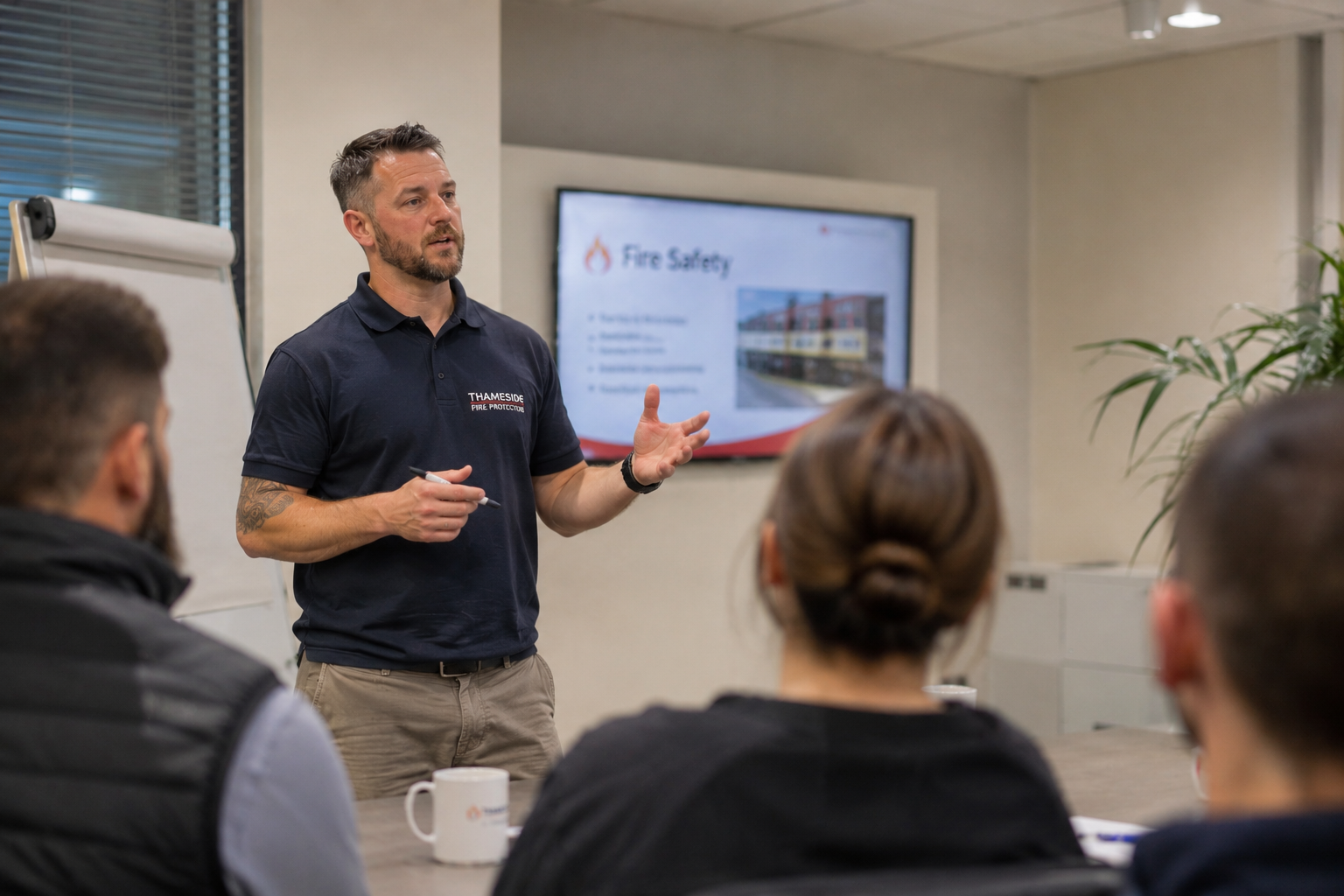
A workplace safety induction introduces new employees to the hazards, procedures and responsibilities they need to understand before starting work. An effective induction goes beyond explaining company policies. It helps new staff recognise potential dangers, work safely, respond to emergencies and know who to approach when something goes wrong.
Whether you’re welcoming employees into an office, warehouse, factory, construction site or hospitality environment, a well-planned safety induction is essential for protecting people and meeting your legal responsibilities. This guide explains what to include, how to deliver the training effectively and how to make sure new employees understand the information they’ve been given.
What is a workplace safety induction?
A workplace safety induction is the initial health and safety training provided to employees when they join an organisation or start working at a particular location. It introduces the risks associated with their working environment, the precautions in place to manage those risks and the procedures they must follow to protect themselves and others.
Unlike general onboarding, which might cover company values, administrative processes and job responsibilities, a safety induction focuses specifically on preventing accidents, injuries and work-related ill health.
A typical safety induction covers:
- Workplace hazards and risk assessments
- Health and safety policies and responsibilities
- Fire safety and emergency evacuation procedures
- Safe working practices and equipment use
- Personal protective equipment (PPE), where required
- Accident, incident and near-miss reporting
- First aid arrangements
- The people responsible for workplace safety
The content should reflect the specific risks employees will encounter. Someone working in an office will have different training requirements from someone operating machinery in a factory or handling hazardous substances in a warehouse.
Why are safety inductions important?
New employees are particularly vulnerable to workplace accidents because they may be unfamiliar with their surroundings, equipment and working procedures.
Even experienced workers can face unfamiliar risks when entering a new workplace. They might understand how to operate a particular machine, for example, but be unaware of the site’s pedestrian routes, emergency shutdown procedures or specific operational hazards.
An effective induction helps organisations:
Reduce workplace accidents and injuries. Employees who understand potential hazards and the correct precautions are better equipped to avoid dangerous situations.
Improve emergency preparedness. Staff need to know how to respond to fires, accidents and other emergencies before they happen.
Establish safe working habits. Introducing expectations from the outset encourages employees to take health and safety seriously throughout their employment.
Build confidence. New employees can concentrate on learning their responsibilities when they understand how to carry out their duties safely.
Meet legal obligations. Employers have a duty to provide appropriate health and safety information, instruction, training and supervision.
Safety inductions also provide an opportunity to establish a positive safety culture. Employees should understand that reporting hazards, asking questions and raising concerns are encouraged rather than discouraged.
Are workplace safety inductions a legal requirement?
UK employers have legal duties to provide employees with adequate health and safety training when they begin work.
Under the Health and Safety at Work etc. Act 1974 and the Management of Health and Safety at Work Regulations 1999, employers must take appropriate steps to protect workers from workplace risks. This includes providing suitable training, information and supervision.
The Health and Safety Executive (HSE) advises employers to consider the particular needs of new recruits, inexperienced employees and workers taking on additional responsibilities.
Training must be appropriate to the risks involved, provided during working hours and free for employees.
There is no single statutory induction format or duration that applies to every workplace. Instead, employers must ensure that the information and training provided are sufficient for employees to work safely.
Fire safety training requirements
Fire safety is an essential part of workplace induction.
In England and Wales, the Regulatory Reform (Fire Safety) Order 2005 requires the responsible person to ensure employees receive adequate fire safety training when they are first employed.
Training should explain the fire risks present in the workplace, the precautions in place and the actions employees must take in an emergency.
It must also be repeated periodically where appropriate, particularly when employees face new or increased risks.
Fire safety legislation differs in Scotland and Northern Ireland, but employers throughout the UK have duties relating to fire precautions and staff training.
How to prepare for a new employee’s safety induction
An effective safety induction begins before the employee arrives. Preparing the relevant information, equipment and training arrangements makes the process more useful and reduces the likelihood of important details being overlooked.
Review workplace risk assessments
Start by reviewing the risks relevant to the employee’s role and working environment.
Your risk assessments should identify potential hazards, who might be harmed and the measures needed to control those risks.
Consider whether the new employee will encounter hazards involving machinery, vehicles, electricity, hazardous substances, manual handling, working at height or other activities.
The induction should explain how these risks affect the employee’s work rather than simply presenting them with lengthy risk assessment documents.
Identify role-specific training requirements
Different employees require different levels of training.
For example, a warehouse operative might need instruction on pedestrian routes, vehicle movements and manual handling. A maintenance engineer may require training on isolation procedures, working at height and the safe use of specialist equipment.
Identify any training, qualifications, supervision or authorisation required before the employee can undertake particular tasks.
Prepare the necessary documents and equipment
Gather the relevant safety information before the induction, including:
- Health and safety policies
- Relevant risk assessments and safe working procedures
- Emergency evacuation plans
- Accident and incident reporting procedures
- PPE requirements
- Equipment operating instructions
- Training and induction checklists
Arrange any required PPE and confirm it fits the employee correctly.
If employees need to complete additional training before using equipment or performing certain activities, make sure these arrangements are in place.
Assign responsibility for delivering the induction
Nominate a competent person to conduct the induction, such as a trained supervisor, manager or health and safety representative.
Where specialist knowledge is required, individual sections may need to be delivered by appropriately qualified personnel.
The person conducting the induction should understand the workplace’s hazards and procedures well enough to explain them, demonstrate safe practices and answer questions.
What should a safety induction cover?
Although induction programmes vary between workplaces, several essential topics should be considered for every new employee.
Health and safety policies and responsibilities
Start by explaining the organisation’s approach to health and safety.
Employees should understand their responsibility to follow safe working procedures, cooperate with safety arrangements, use equipment correctly and report hazards.
Identify the people responsible for health and safety, including relevant managers, supervisors, safety representatives and first aiders.
Make sure employees know who they can approach with concerns and how to escalate a serious safety issue.
Workplace hazards and control measures
Introduce the hazards employees may encounter in their working environment.
These could include:
- Slips, trips and falls
- Moving vehicles and machinery
- Electrical hazards
- Hazardous substances
- Manual handling activities
- Noise and vibration
- Working at height
- Fire and explosion risks
- Poor workstation ergonomics
Explain the measures used to manage these risks, including physical safeguards, safe working procedures, restrictions on particular activities and any necessary protective equipment.
Where possible, demonstrate these precautions in the actual working environment.
Fire safety and emergency evacuation
Every employee needs to understand the workplace’s fire safety arrangements, regardless of their role.
The fire safety element of the induction should explain:
- Fire hazards: Common sources of ignition and combustible materials in the workplace.
- Fire alarms: How to raise the alarm and recognise the alarm signal.
- Escape routes: The location of emergency exits and alternative escape routes.
- Assembly points: Where employees should gather after evacuating.
- Evacuation procedures: What to do when the alarm sounds and who coordinates the evacuation.
- Fire doors: Why they must remain unobstructed and should not be wedged open.
- Fire extinguishers: Where firefighting equipment is located and the limits of its safe use.
- Additional assistance: The arrangements for employees or visitors who may need help evacuating.
A practical walk-through is particularly valuable. Show new employees the nearest fire exits, alternative routes, alarm call points and assembly areas rather than relying entirely on diagrams.
Staff should understand that their priority during a fire is to raise the alarm, follow the emergency procedures and reach safety. They should not attempt to fight a fire unless they have received appropriate training, the circumstances are safe and doing so is consistent with the organisation’s procedures.
Some employees, such as designated fire wardens, will require additional instruction appropriate to their responsibilities.
Safe use of equipment and machinery
Employees must understand how to use the equipment relevant to their role safely.
The induction should identify which equipment they are authorised to use, the safety checks required before operation and the procedures for reporting defects.
Where machinery presents significant risks, employees may need dedicated practical training and supervision before operating it independently.
Demonstrate any relevant emergency stop controls, guarding arrangements and isolation procedures.
A general induction should never be treated as a substitute for specialist equipment training.
Personal protective equipment
Where PPE is required, explain what employees must wear, when it is needed and how to use it correctly.
This might include safety footwear, protective gloves, helmets, high-visibility clothing, hearing protection or respiratory protective equipment.
Employees should understand how to inspect, maintain and store their PPE, as well as how to report damage or request replacements.
It is important to explain that PPE is one element of workplace risk control and does not replace safer working methods or appropriate engineering safeguards.
Accident, incident and near-miss reporting
New employees should know exactly what to do if an accident occurs or they identify a potentially dangerous situation.
Explain how to report injuries, unsafe conditions, equipment defects and near misses.
Identify who should receive reports, how incidents are recorded and what action employees should take if they believe there is an immediate danger.
Encourage staff to report near misses even when nobody has been injured. These incidents can reveal problems that need addressing before a more serious accident occurs.
Employers should also ensure that managers understand their responsibilities for investigating incidents and making any legally required reports.
First aid and welfare arrangements
Show employees where first aid equipment is kept and identify the workplace’s appointed first aid personnel.
Explain how to summon assistance and what procedures to follow during a medical emergency.
The induction should also identify relevant welfare facilities, including toilets, drinking water, washing facilities and rest areas.
Where specific health risks exist, explain any additional precautions or health surveillance arrangements relevant to the employee’s role.
How to deliver an effective safety induction: A step-by-step approach
Having the right information is only part of an effective induction. How that information is delivered determines whether employees understand and remember it.
Step 1: Begin before the employee starts work
Essential safety information should be provided before employees begin activities that could expose them or others to harm.
Depending on the workplace, it may be appropriate to provide general policies and introductory materials before their first day.
However, advance reading should complement rather than replace the practical instruction and supervision needed when the employee arrives.
Step 2: Explain the most important safety information first
Begin with information employees need immediately, particularly emergency procedures, significant workplace hazards and activities they must not undertake without authorisation.
Avoid overwhelming new starters with every procedure at once.
Prioritise essential information, then introduce more detailed training as the employee becomes familiar with their duties.
Step 3: Conduct a practical workplace tour
A physical tour helps employees connect the information they’ve received with their working environment.
Show them important safety features such as emergency exits, alarm call points, first aid equipment, restricted areas and locations where particular hazards exist.
Explain any site-specific rules, such as pedestrian routes through a warehouse or access restrictions around machinery.
Encourage questions throughout the tour.
Step 4: Demonstrate safe working practices
Where relevant, demonstrate how tasks should be performed safely.
For example, this could include checking equipment before use, following manual handling procedures or correctly putting on protective equipment.
Allow the employee to practise under supervision where appropriate.
Practical demonstrations are often more effective than expecting new staff to remember written instructions alone.
Step 5: Check the employee’s understanding
An effective induction should be interactive rather than a one-way presentation.
Ask employees to explain important procedures in their own words, demonstrate safe practices or respond to realistic workplace scenarios.
For example, you might ask:
- What would you do if you discovered a fire?
- Where would you go if the fire alarm sounded?
- Who would you tell if a piece of equipment appeared unsafe?
- What checks are needed before starting a particular task?
These questions help identify gaps in understanding before the employee begins working independently.
Step 6: Record the induction and any outstanding training
Once the induction is complete, document the information covered and any practical demonstrations undertaken.
Record the date, the person delivering the training and the employee’s participation.
A signed induction record can provide useful evidence of the instruction given, but a signature alone does not demonstrate competence.
If further training or supervision is needed, record what remains outstanding and who is responsible for arranging it.
Employees should not be authorised to undertake hazardous tasks until they have received the necessary instruction and demonstrated the competence required.
Step 7: Follow up during the first few weeks
An induction should mark the beginning of workplace safety training, not the end.
Arrange follow-up discussions to check whether the employee is working safely, understands the procedures and has encountered any unexpected hazards.
Supervisors should monitor working practices and provide additional support where necessary.
This is particularly important for employees with limited experience or those working in unfamiliar or higher-risk environments.
Adapting safety inductions to different workplaces
A standard induction framework can help maintain consistency, but its content must reflect the working environment.
Offices
Office-based inductions may focus on fire evacuation, workstation setup, electrical safety, slips and trips, incident reporting and general workplace welfare.
Warehouses and distribution centres
Additional emphasis may be needed on forklift movements, pedestrian segregation, loading areas, manual handling, racking systems and emergency procedures.
Factories and industrial facilities
Employees may require more detailed instruction on machinery guarding, hazardous substances, noise, isolation procedures, maintenance activities and specialist PPE.
Construction sites
Site inductions should reflect the hazards and arrangements of the particular project, including working at height, moving plant, excavations, restricted areas, site traffic and emergency arrangements.
Construction workers may also require specific training or authorisations for particular tasks.
Hospitality and commercial kitchens
Relevant topics may include hot surfaces, cooking equipment, kitchen fires, burns, slips, cleaning chemicals and evacuation procedures.
Staff should understand the specific fire hazards associated with cooking operations and the precautions used to control them.
Care homes and healthcare settings
Inductions may need to place particular emphasis on assisting vulnerable people, infection control, moving and handling, emergency communication and the building’s evacuation strategy.
In premises where occupants may be unable to evacuate without assistance, staff must understand their specific responsibilities and the procedures designed to protect those in their care.
Making safety inductions accessible to all employees
Training is only effective when employees can understand and apply it.
Consider whether new starters have language, literacy, communication or accessibility needs that affect how information should be presented.
For example, some workers may benefit from translated instructions, illustrated safety guides, demonstrations or additional time to ask questions.
You should also consider whether a worker’s age, experience, disability or familiarity with the workplace creates additional training or supervision needs.
Avoid assuming that employees have understood an instruction simply because they have acknowledged it.
Practical demonstrations and open questions provide a better indication of whether important information has been retained.
Common mistakes to avoid during safety inductions
Even organisations with established induction programmes can make mistakes that reduce their effectiveness.
Relying entirely on paperwork. Asking employees to read a policy and sign a form does not establish that they understand the risks or know what to do in an emergency.
Providing too much information at once. Long presentations covering every workplace procedure can make it difficult for new starters to retain essential information.
Using identical training for every employee. Generic inductions may overlook important hazards associated with particular roles, equipment or working locations.
Failing to demonstrate emergency procedures. Employees should know where escape routes and assembly points are located, not simply be told that evacuation procedures exist.
Assuming previous experience is sufficient. Experienced workers still need to understand site-specific hazards and procedures.
Allowing employees to work unsupervised too early. Completing an induction does not automatically mean someone is competent to undertake every task.
Failing to review training materials. Induction programmes can become outdated when buildings, equipment, working practices or safety procedures change.
Avoiding these mistakes helps ensure that induction programmes provide meaningful protection rather than becoming purely administrative exercises.
When should safety induction training be reviewed or repeated?
Initial induction training should be supported by ongoing instruction and refresher training appropriate to the risks involved.
Additional training may be necessary when employees change roles, new equipment is introduced, working procedures are modified or previously unidentified hazards emerge.
Accidents, near misses and weaknesses identified during emergency drills may also indicate that training needs improvement.
Fire safety training should be repeated periodically. Government guidance for England and Wales identifies annual refresher training as recognised practice, although the appropriate frequency depends on the premises and its fire risk assessment. Higher-risk environments may require more frequent instruction.
Employers should periodically review their induction programmes to ensure that the information remains accurate and reflects current workplace conditions.
Workplace safety induction checklist
The following checklist can be used as a starting point when planning an induction for new staff. Adapt it to the particular hazards, responsibilities and procedures of your organisation.
| Induction topic | Completed |
|---|---|
| Health and safety policy and employee responsibilities explained | ☐ |
| Relevant workplace hazards identified and discussed | ☐ |
| Risk control measures and safe working procedures explained | ☐ |
| Fire alarm and evacuation procedures demonstrated | ☐ |
| Emergency exits and assembly points identified | ☐ |
| First aid arrangements and personnel introduced | ☐ |
| Accident, incident and near-miss reporting explained | ☐ |
| Required PPE provided and its use demonstrated | ☐ |
| Equipment restrictions and specialist training requirements explained | ☐ |
| Workplace tour completed | ☐ |
| Employee understanding checked | ☐ |
| Outstanding training and supervision requirements recorded | ☐ |
| Induction record completed | ☐ |
| Follow-up review arranged | ☐ |
The checklist should be treated as a planning and recording aid rather than proof that every legal duty has been fulfilled.
Some workplaces will require substantially more detailed arrangements, particularly where employees undertake hazardous activities or have responsibility for the safety of others.
FAQs
Can online training replace an in-person safety induction?
Online training can be useful for introducing general health and safety principles, explaining policies and checking knowledge. However, it may not adequately cover site-specific hazards, practical equipment use or the location of emergency facilities.
A combination of online learning, practical demonstrations, workplace tours and supervised activities may be more appropriate, depending on the risks involved.
Do experienced employees still need a safety induction?
Yes. Previous experience does not remove the need for employees to understand the risks and procedures associated with a new workplace.
An experienced employee might already be competent in particular activities, but still need to learn the organisation’s emergency arrangements, reporting procedures and local safety rules.
Previous qualifications and training may help determine what additional instruction is necessary, but they should not automatically replace workplace-specific induction.
Do employees working at multiple sites need a separate induction for each location?
Employees working across several sites should receive appropriate information about the hazards and safety arrangements at each location.
Common elements of training may not need to be repeated in full, but differences in equipment, access arrangements, emergency procedures and site-specific risks should be explained before work begins.
The level of additional instruction should reflect the risks involved.
Strengthen your workplace fire safety training with Thameside Fire Protection
An effective safety induction provides employees with an essential foundation for working safely. However, some areas of workplace safety require additional specialist instruction, particularly when employees have responsibility for fire prevention, emergency response or evacuation procedures.
At Thameside Fire Protection, we provide professional workplace fire safety training courses tailored to the needs of different organisations and working environments.
Our courses include fire awareness, fire extinguisher training, fire warden training and other specialist safety programmes, helping your employees develop the knowledge and confidence to respond appropriately to workplace emergencies.
We can deliver training at your premises or our training facilities, with programmes adapted to your organisation’s fire risks and operational requirements.
Contact Thameside Fire Protection to discuss your workplace fire safety training requirements and request a quotation.